What are peptides — really?
Peptides are tiny messages your body already uses. We use them to remind it how to burn fat, sleep deeper, repair tissue, and age slower — without forcing anything.
A peptide is a short chain of amino acids that acts like a signal — telling one specific system in your body to turn on, tune up, or repair itself.
Talk to a real human — no bots, no wait rooms. Text anytime.
What kind of learner are you?
Pick your favorite metaphor. We'll teach peptides the way your brain likes to hear them.
Three steps. That's it.
Amino acids link up
A peptide is just a short chain of amino acids — the same building blocks your body already uses to make everything from insulin to collagen.
The chain becomes a signal
That specific sequence acts like a key. It fits a receptor on your cells and delivers a message: burn fat, release growth hormone, repair tissue, calm inflammation.
Your body does the work
Peptides don't force anything. They tell your body to do what it already knows how to do — but has slowed down doing with age, stress, or poor sleep.
When the shape fits, the signal fires — and your body does one very specific thing better than it did yesterday.
Peptide vs. protein — what's the difference?
Same building blocks. Different length. Proteins are long, folded machines (think collagen, hemoglobin). Peptides are short, snappy messages. Short means the body reads them fast — and they're small enough to slip into places big proteins can't.
Talk to a real human — no bots, no wait rooms. Text anytime.
Six things peptides are used for.
Your body, mapped by signal.
Each family targets a specific gland, organ, or tissue — asking it to do more of what it already knows how to do.
Hover or tap a dot →
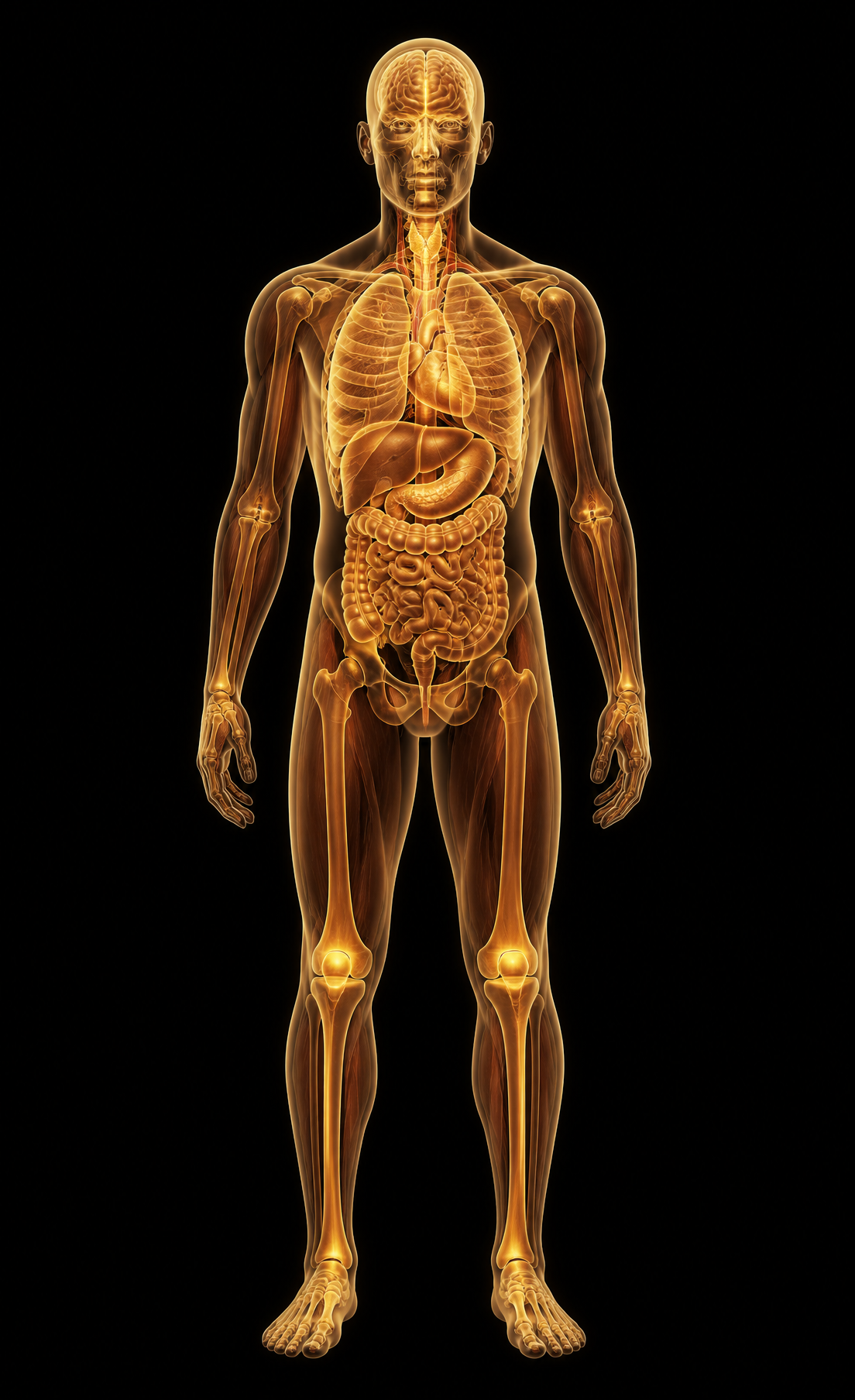
The master gland. It releases growth hormone, sets your sleep-wake rhythm, and tells other glands what to do.
Two different jobs.
Go deeper. Actually learn this stuff.
We built this section for the people who want to understand what they're putting in their body — not just take it. Categories, history, glossary, and how-tos. Read one card or read them all.
GLP-1 and dual agonists (semaglutide, tirzepatide) slow gastric emptying, blunt appetite signals, and improve insulin sensitivity. Best paired with protein-forward nutrition and resistance training to protect lean mass.
BPC-157 and TB-500 modulate growth factors, angiogenesis, and inflammation at the site of injury. Often stacked short-term for soft-tissue rehab, gut lining repair, and post-training recovery.
Peptides like Ipamorelin, CJC-1295, and Sermorelin nudge your pituitary to release your own growth hormone in natural pulses — mostly at night. Result: deeper sleep, better recovery, gradual body-comp shifts.
Nootropic peptides support neurotransmitter balance, BDNF expression, and neural repair. Used for focus, mood support, and long-term brain resilience — not as stimulants.
Thymic peptides recalibrate immune signaling; longevity peptides target senescent cells, mitochondrial function, and cellular energy. Slower to feel, meaningful over months.
Copper peptides drive collagen and wound healing; melanocortin peptides act on desire pathways in the brain, not the plumbing. Small, targeted molecules with visible outcomes.
From secretin to semaglutide — 120 years, one idea.
Bayliss & Starling identify secretin — the first known peptide messenger. The concept of chemical signaling between organs is born.
Banting & Best isolate insulin, a 51-amino-acid peptide. Diabetes stops being a death sentence overnight.
Vincent du Vigneaud synthesizes oxytocin — proving humans can build these signals in a lab. Wins the Nobel Prize in 1955.
GHRH and early secretagogues are characterized. The pathway that today's Ipamorelin and CJC-1295 target is mapped.
Exenatide (from Gila monster venom) is FDA-approved for type 2 diabetes. Sets the stage for semaglutide and tirzepatide.
Compounding pharmacies, provider-directed protocols, and modern labs make targeted peptide protocols accessible for optimization — not just disease.
Eight words that unlock every conversation.
The 20 basic molecular units your body strings together to build every peptide, protein, and enzyme.
A protein on (or inside) a cell that a peptide binds to — like a lock that only opens for the right key.
How long the peptide stays active in your body before it's broken down. Drives dosing frequency.
Injected into the fatty layer just under the skin with a very small insulin-style needle. Most peptides are dosed this way.
A molecule that turns a receptor ON. GLP-1 agonists mimic your natural GLP-1 signal, only stronger and longer.
A peptide that tells a gland (usually the pituitary) to release more of a hormone your body already makes.
A licensed pharmacy that custom-prepares medications — including peptides — under state and federal oversight.
Slowly increasing a dose over weeks so your body adapts and side effects stay minimal.
Practical guides — the stuff most sites won't tell you.
Needle size, sites, rotation, storage, and the small habits that make daily dosing painless.
Why some peptides run continuously, why others are cycled 8-on / 4-off, and how stacks are built without redundancy.
Compounded pharmacy vs. 'research-grade' gray market. What a real Certificate of Analysis looks like — and what to avoid.
How to spot solid clinical data vs. bro-science, and where the evidence base is genuinely strong today.
Talk to a real human — no bots, no wait rooms. Text anytime.
The things everyone asks first.
Are peptides safe?+
How are they taken?+
How fast do they work?+
Do I need a prescription?+
Will they show up on a drug test?+
Take the quiz. Get a real plan.
Two minutes of intake. A licensed provider reviews it and recommends the exact peptide protocol — or tells you it's not the right tool for you.
Real humans, real answers — before you commit.
Browse the most-asked questions, message the team, or take the 2-minute quiz and get a personalized plan.